COMPLEX TRAUMA &
EMDR SPECIALIST
Craig Holm MACP | RCC
When you’ve tried to move on—but something still feels stuck. You may understand your past. You may have done therapy before. And still—your body reacts. Old patterns keep showing up. Something doesn’t shift. It may be that what you’re carrying lives deeper than words can reach.
That’s where this work begins.
Most of us have tried to think our way through our pain. We understand where it came from. We can explain it. And still it persists — in our bodies, our relationships, our reactions. That’s because trauma doesn’t live primarily in the mind. It lives in the nervous system. It lives in the body.
This is what I learned, viscerally, during my own time on silent Vipassana retreats — that genuine healing requires more than insight. It requires a direct, present-moment experience of what’s actually there. You can’t think your way out of what you felt your way into.
EMDR — Eye Movement Desensitization and Reprocessing — works at exactly this level. Rather than analyzing the past from a distance, EMDR engages your nervous system directly, helping it finally process what got stuck. It’s one of the gold-standard, empirically validated trauma therapies, endorsed by organizations including Veterans Affairs Canada and championed by leading trauma researchers like Bessel van der Kolk. It works because it addresses the full spectrum of human experience simultaneously: somatic, cognitive, emotional, and imaginal.
In over a decade of clinical work, I haven’t found a more thorough, lasting, or rapid path to genuine change.
What EMDR Can Help With
EMDR can be highly effective for a wide range of presentations, including:
– Complex developmental trauma (CPTSD)
– PTSD and acute trauma
– Childhood neglect and early attachment wounding
– Dissociative symptoms
– Anxiety and panic
– Depression rooted in unprocessed experience
– Grief and loss
– Violence, abuse, and sexual assault
– Low self-worth and persistent self-sabotage
– Medical trauma and chronic pain
– Phobias
– Performance anxiety
If you’re unsure whether your situation fits, reach out. I’m happy to talk it through.
Complex PTSD — CPTSD — develops not from a single event, but from prolonged or repeated experiences: childhood neglect or abuse, relational trauma, years of feeling unsafe or unseen. It often shows up as difficulty regulating emotions, persistent shame, troubled relationships, a fragmented sense of self, or the feeling that no matter how much work you do, something fundamental doesn’t shift.
Standard therapy can help, but it often isn’t enough. CPTSD requires an approach that can hold complexity — one that works with the nervous system rather than around it, and that understands how trauma fragments the self into parts that each carry their own history, their own pain, their own logic.
My work with complex trauma integrates EMDR with Ego State and parts-based approaches. This means we work not just with your memories or your thoughts, but with the different aspects of you that have been shaped by your experiences — and we do it carefully, at a pace your system can manage.
This is work I genuinely find meaningful. I’m drawn to complex cases — to the puzzle of them, and to the satisfaction of collaborating with clients to create treatment plans that actually reach what other approaches have left untouched.
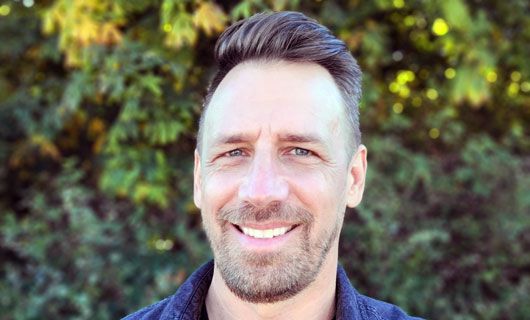
I’m Craig Holm, a Registered Clinical Counsellor and EMDR Certified Therapist in Victoria, BC. I work with adults navigating trauma, complex trauma, CPTSD, and the layered effects of early or relational wounding. My approach goes beyond managing symptoms — we work at the level where change actually happens: in the body, in present-moment awareness, at the root.
I came to counselling the long way around.
I spent two decades in marketing and branding — working as a copywriter and brand strategist — before something shifted. A handful of silent Vipassana retreats had a lot to do with it. Those experiences showed me, in ways I couldn’t argue with, that real healing isn’t primarily intellectual. The root of suffering isn’t fully in the mind. And any approach to healing that doesn’t work directly with the body and with present-moment awareness is only going to go so far.
I wanted to do work that actually went somewhere. So I went back to school.
I completed my Master of Arts in Counselling Psychology at the Institute of Transpersonal Psychology, began working with clients in 2012, and got my first real look at EMDR in 2016. I was skeptical — and then I watched it work in ways I couldn’t explain with the frameworks I already had. I’ve spent the years since going deep: training after training, complex case after complex case, gradually building a practice focused on the clients who need this kind of depth the most.
Outside the therapy room, I spend as much time outdoors as possible — backpacking, mountain biking with my son (rubber side down, mostly), and planning longer section hikes. I enjoy quality time with my partner, music and all things audio, and the ongoing, somewhat humbling project of trying to understand the nature of consciousness and the world we find ourselves in.
How I Work
I’m welcoming, but I’m not passive. I’ll create the safety you need to go into difficult territory — and then I’ll go there with you. I believe good therapy moves, and I’ll gently challenge you when staying still is what’s keeping you stuck.
I have a particular respect for clients who’ve done work before, know something about themselves, and are ready to go deeper. Many of the people I work with have been in therapy, understand their history, and are frustrated that understanding hasn’t been enough to shift the weight they’re carrying. That frustration makes complete sense to me — and it’s exactly the gap EMDR is built to close.
CREDENTIALS & TRAINING
Professional Memberships
– Registered Clinical Counsellor (RCC #11762) — BC Association of Clinical Counsellors
– EMDR Certified Therapist — EMDR Canada
– EMDRIA Member
Education
– Master of Arts in Counselling Psychology — Institute of Transpersonal Psychology
– Bachelor of Commerce
Specialized Training
– EMDR Therapy Basic Training
– EMDR 2.0 — An Enhanced Version of EMDR Therapy
– EMDR and Ego State Therapy Across the Dissociative Continuum
– EMDR for Early Trauma and Neglect in Implicit Memory
– Simplifying Complex PTSD: New Treatment Approaches
– Healing the Fragmented Selves of Trauma Survivors
– Treating Personality Disorders with EMDR Therapy
– Defense and Affect Restructuring with EMDR Therapy
– EMDR Flash Technique
– Working with the Spectrum of Eating Disorders within the EMDR Approach
– Somatic Experiencing
– Advanced Psychosynthesis Workshop
FEES
$170 per 50-minute session (GST exempt)
Many extended health benefit plans cover sessions with a Registered Clinical Counsellor. I don’t direct bill, but I provide receipts for you to submit to your insurer. Check with your provider about your coverage before we begin.
I am registered with the Crime Victim Assistance Program (CVAP) and accept CVAP-funded sessions. Please note there is a top-up fee above the CVAP rate.
I am not currently accepting ICBC or WorkSafeBC claims.
FAQ
Who do you work with?
Primarily adults carrying trauma, complex or developmental trauma — people whose history is layered, whose healing may have stalled, or whose nervous systems haven’t settled despite genuine effort. I also work with self-motivated teens where the fit is right. If you’re unsure whether your situation is a match, reach out and we’ll figure it out together.
Do you offer free consultations?
I don’t — and I want to be transparent about why. Initial conversations with new clients often move quickly into meaningful therapeutic territory. Without a signed Informed Consent in place, you don’t yet have the formal confidentiality protections you’re entitled to. Structuring our first contact as a paid session protects you from the start.
Do you offer virtual sessions?
I offer both in-person and virtual sessions via Zoom.
How long does treatment typically take?
It depends significantly on what you’re bringing and what your goals are. Focused trauma work can move relatively quickly with EMDR — faster than many people expect. Complex or developmental trauma typically takes longer, and the pace is always guided by what your system can integrate. I’ll give you my honest assessment as we go.
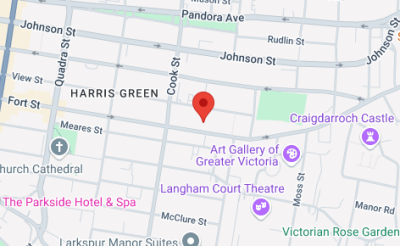
Ready to Take the Next Step?
Taking that first step takes something — especially when you’ve been carrying this for a long time, or when past attempts to heal have left you uncertain. You don’t need to have it figured out before you reach out.

